Wisconsin Ledge AVA · Glenmore, Wisconsin
Estate-grown grapes from a working family farm, fifteen minutes from Green Bay.
Schuettpelz Family Farm · Est. 2018
Estate-grown grapes from a working family farm, fifteen minutes from Green Bay.
Schuettpelz Family Farm · Est. 2018
"We're a family farm on the dolomite ledge in Wisconsin, growing grapes that didn't exist a generation ago, in a place where people build fires in January, play cornhole between the rows, and watch the space station fly over the vineyard."What Pelz & Vine Is
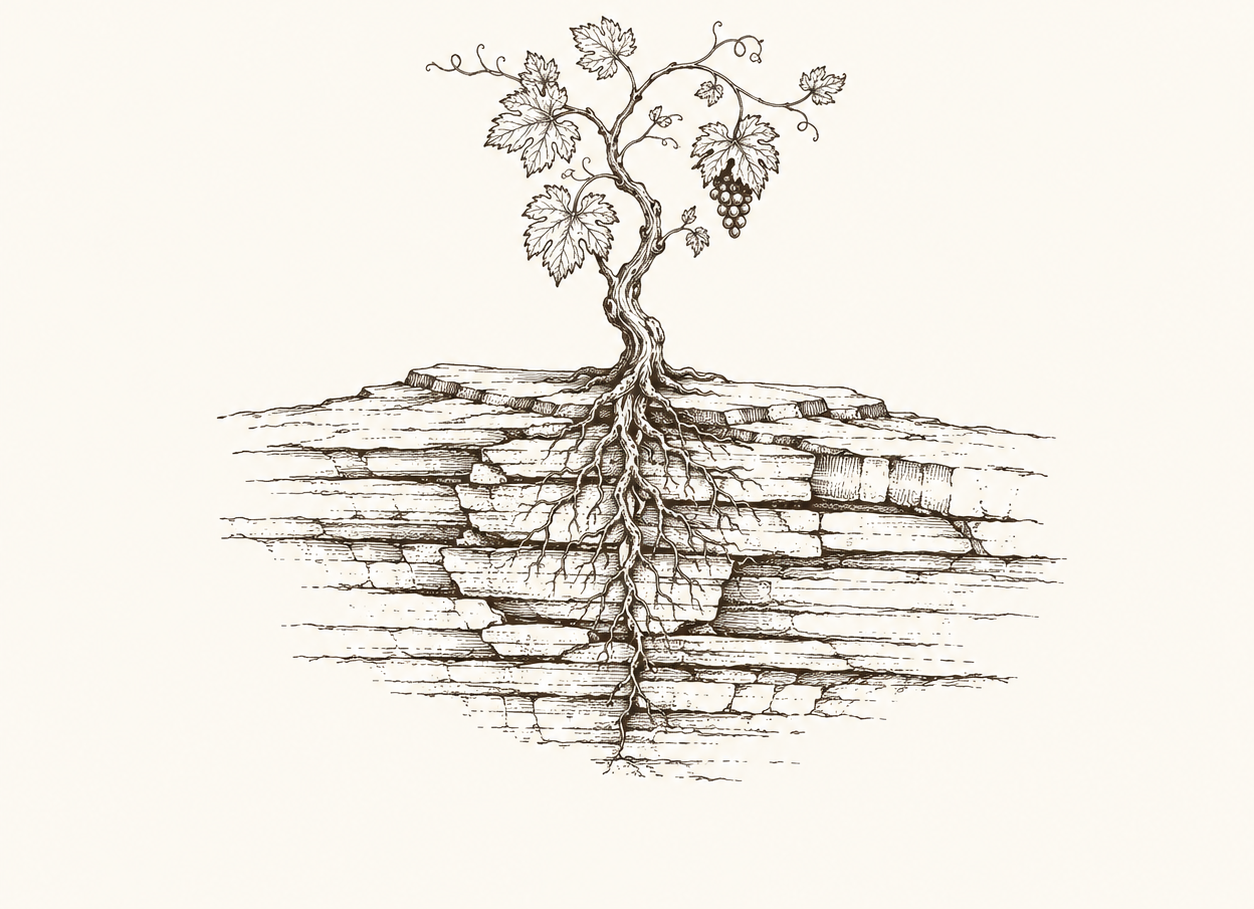
Four hundred million years ago, this ground was the floor of a shallow sea. The shells of tiny creatures piled up and became dolomite limestone — the Niagara Escarpment, running from New York through Ontario into Wisconsin. In Glenmore, that ancient bedrock sits under glacial till dropped ten thousand years ago, and it's what makes the Wisconsin Ledge AVA a real, distinct place to grow grapes — not a marketing label.
The Schuettpelz family — a North German name meaning "shake the fur" — took over this Glenmore farm in 2016. Like most ground in Brown County, it started as a dairy farm, then spent years boarding horses. In 2018, the family put it back into serious agricultural production — with grapevines instead of cattle or horses. Not a generations-old vineyard dynasty; a working farm that chose grapevines as its next chapter.
"A century of dairy. A decade of new family ownership. A handful of years of grapevines. Grapes you've never heard of, from a farm that's always worked for a living."
1.5 acres planted since 2018, producing roughly 5,000 pounds of fruit a year. Six grape varieties bred to survive Wisconsin winters without giving up flavor or character — grapes that mostly didn't exist a generation ago.
The workhorse of the cold-climate world — vigorous and disease-resistant, bred at the University of Minnesota to survive winters that would kill many warm-climate vines outright.
A vigorous, floral variety and one of the most widely planted cold-hardy grapes in the Midwest.
Deep-colored and vigorous, a newer variety already earning a following among growers.
A gray-skinned sport of Frontenac, valued for its versatility and adaptability across growing conditions.
A distinctive cold-hardy variety, known for ripening with a natural tropical, pineapple character — one of the few grown this far north.
High-acid and hardy, with bright cherry-red fruit — a reliable performer across Wisconsin's growing conditions.
The dolomite ledge, the glacial till above it, and Green Bay's moderating effect on temperature all shape what grows here — and how it has to be grown.
Down to −35°F. Only genuinely cold-hardy varieties survive — this is the filter every vine in the ground has already passed.
Bud break is fast and short. The vines go from dormant to growing in a matter of weeks.
Long days, warm afternoons, cool nights — the swing that builds sugar without losing acid.
A race against the first hard frost. Every harvest decision matters more here than in a six-month growing window.
A working vineyard on a family farm, est. 2018.
Right now: pick-your-own grapes are open by appointment each fall. Reach out below to arrange a visit.
 Stay in Touch
The domain and socials aren't live yet — for now, the best way to reach the farm is directly.